







 Home
Home Scar revision

What Is Scar Revision?
Scar revision surgery is a procedure designed to improve the appearance of scars that result from injury, surgery, or burns. Depending on the severity and location of the scar, this treatment can also help restore normal skin function and movement.
Scar tissue forms naturally as the skin heals after an injury or surgical incision. However, the final appearance of the scar can vary depending on several factors.
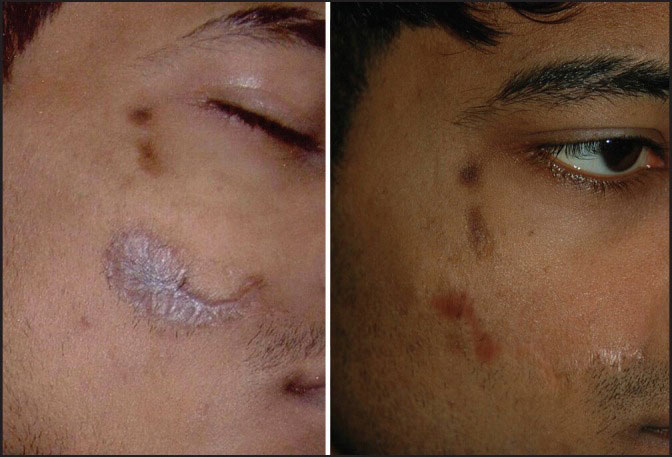
Factors That Affect Scarring
Size, depth, and location of the original wound
Age of the patient
Skin type and pigmentation
Depending on the extent and type of scar, scar revision can be performed under:
Local anesthesia (while you are awake)
Sedation (light sleep)
General anesthesia (fully asleep and pain-free)
When to Consider Scar Revision
For other scars, revision is most effective when performed 60 to 90 days after the scar has matured. Each case is unique and should be evaluated by a qualified surgeon.
Techniques for Improving Scar Appearance
1.Excision and Re-closure
The scar may be completely removed and the wound carefully re-closed using precise suturing techniques to create a thinner, less noticeable line.
2.Dermabrasion
A specialized rotating instrument (called a burr or fraise) removes the upper layers of skin, allowing new, smoother skin to form. This method helps soften rough surfaces or irregular textures.
3.Laser Therapy
Laser treatments can reduce redness, smooth the scar’s surface, and stimulate new collagen growth to improve overall texture and color.
4.Z-Plasty and Other Flap Techniques
For large scars or contractures (tight scars that restrict movement), surgeons may use Z-plasty — a technique involving small, angled incisions to reposition the scar within natural skin lines. This reduces tension and improves flexibility.
5.Skin Grafting and Flap Surgery
When large areas of skin are lost (as in burns), a skin graft or flap surgery may be necessary.
Skin grafts involve transplanting thin layers of healthy skin from another body area.
Flap surgery transfers a full-thickness section of skin, along with fat, blood vessels, and sometimes muscle, to the scarred area for improved healing and function.
6.Tissue Expansion
Commonly used in breast reconstruction and large scar repairs, this method involves inserting a silicone balloon under healthy skin and gradually inflating it with saline. Over time, the skin stretches and grows, allowing for reconstruction of the damaged area.
